

Blending Hair Topper with Real Hair: The Luxe Look Guide
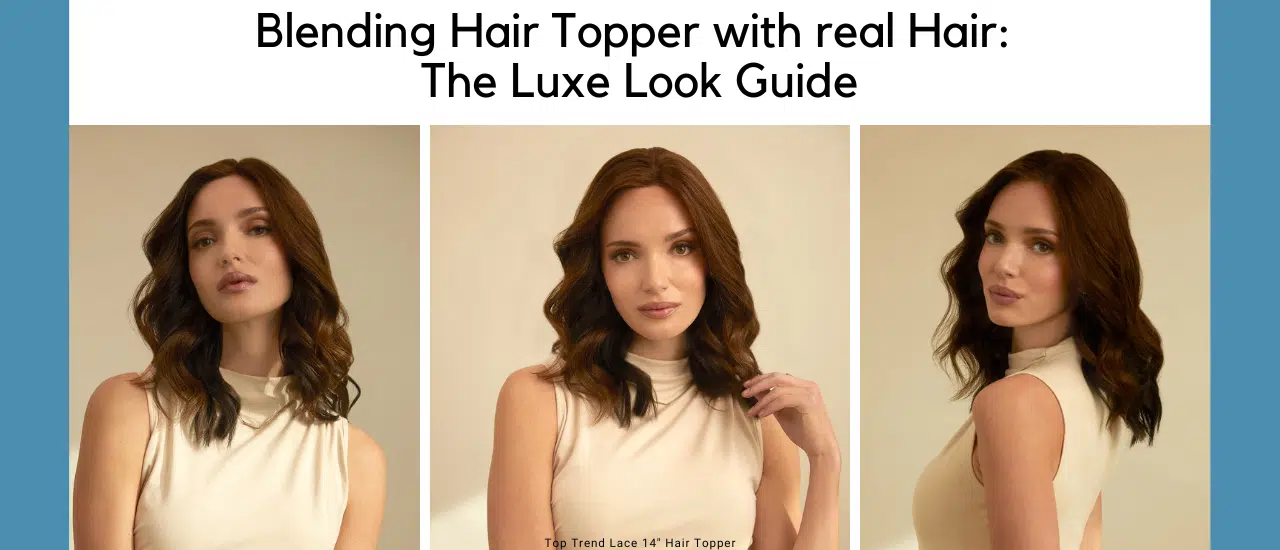
Ever wished you could snap your fingers and instantly have fuller, flawless hair that looks 100% natural? That’s the magic of blending a hair topper with real hair—when done right, no one will know where your natural strands end and the topper begins. But here’s the thing: achieving that seamless finish takes more than just clipping it on and heading out the door.
Blending hair topper with real hair is an art. And like any good masterpiece, it takes a little know-how, the right tools, and a few insider tricks. Whether you’re brand new to toppers or just want to refine your routine, this guide will walk you through everything you need to create a flawless, undetectable look—every single time.
Understanding the Basics of Blending Hair Topper with Real Hair
Hair toppers are small, versatile hairpieces designed to blend with your natural hair and conceal thinning areas, especially at the crown, part line, or top of the head. Whether you’re experiencing postpartum shedding, hereditary thinning, or just want extra volume for styling, blending hair topper with real hair makes all the difference in achieving a natural, confident look.
Types of Hair Toppers
Hair toppers come in a variety of materials, base constructions, and coverage sizes, each designed to suit different types of hair thinning and styling needs.
Synthetic vs. Human Hair
Choosing between synthetic and human hair toppers depends on your styling needs and lifestyle.
Synthetic Hair Toppers
- Made from heat-resistant fibers that mimic real hair
- Ideal for quick-use wearers, perfect for people who don’t want to spend time styling
- Pre-styled with memory technology—great for maintaining curls or waves in humid weather
- Cannot be recolored or curled with regular heat tools unless labeled “heat-friendly”
Human Hair Toppers
- Sourced from real human donors; can be styled, straightened, curled, and even dyed
- Best for people who want full styling flexibility—blow-dry, flat iron, or curl just like your own hair
- Higher maintenance but lasts 9–12 months or longer with proper care
- Offers the most natural blend for those with mid-to-high budgets
Base Types
Each base construction affects how realistic and breathable your topper will feel.
Lace Base
- Lightweight and ideal for summer or sensitive scalps
- Creates a scalp illusion and allows ventilation
- Great for those with mild to moderate hair thinning
Monofilament (Mono) Base
- Each hair strand of mono base is hand-tied to a mesh base
- Lets you part the topper in any direction—perfect for versatile styling
- Smooth against the scalp; best for those with more noticeable thinning
Integration Base
- Designed with holes or mesh areas to pull your own hair through
- Ideal for people with thinning hair but enough volume to blend naturally
- Offers the most seamless integration for users with diffuse thinning (not bald patches)
Coverage Area
Match the topper to the specific region of thinning for the most effective coverage:
Crown Coverage
- For those with hair loss at the back top of the head
- Common among women with hormonal or age-related thinning
Part Line Coverage
- Narrow base designed to mimic a natural part
- Ideal for users with central thinning or a widening part due to alopecia or menopause
Full Top Coverage
- Covers the entire top and front of the head
- Best for those with advanced thinning, receding front hairline, or a combination of thinning zones
Choosing the Right Topper
Blending hair topper with real hair involves both accurate measurements and aesthetic compatibility.
Matching Topper Base Size with the Thinning Area
- Use a soft measuring tape to measure the area where hair is thinning
- Add at least ½ inch on all sides so that clips can attach to healthy, strong hair
- Example: If thinning measures 5″x6″, choose a base of 6″x7″ or 6.5″x7.5″
Hair Density and Length Considerations
Choosing the right hair density and length is essential for achieving a natural, balanced look with your topper.
Density
- Choose light density (90–110%) for fine hair
- Choose medium density (120–130%) for average hair
- Avoid high-density toppers unless your natural hair is very thick
Length
- For natural blending, pick a topper slightly longer than your bio hair—then trim and layer it
- Example: If your hair is chin-length, go for a 12″ topper and have it shaped by a stylist
Texture and Color Match
When blending hair topper with real hair, matching the texture and color is crucial. The closer the match, the more undetectable the topper becomes.
Texture
- Match the curl pattern: straight, body wave, loose curl, or coily
- Example: Don’t pair a sleek straight topper with naturally curly hair—opt for texture-matched styles or use heat tools
Color
- Match the topper to your mid-lengths and ends, not roots—especially if your roots are darker or grown out
- Look for toppers with rooted tones, highlights, or balayage to create dimension
- Many brands offer color rings or custom matching services via photos or samples
Preparation Before Blending Hair Topper with Real Hair
Before blending hair topper with real hair, preparation is essential to ensure a comfortable fit, strong grip, and seamless appearance. A clean, prepped base allows your topper to sit flat, blend naturally, and stay in place throughout the day. This step also protects your scalp and prevents damage to your bio hair.
Washing and Conditioning
Proper washing and conditioning set the foundation for a secure and long-lasting hold.
Wash Your Hair Thoroughly
- Use a gentle shampoo to remove oil, dirt, and product buildup.
- Rinse thoroughly to avoid residue that could affect clip grip or adhesive strength.
- Avoid dry shampoo or leave-in products right before topper application, as they can make the hair slippery.
Condition Only Where Needed
- Apply conditioner from the mid-shaft down to the ends—not at the roots.
- Heavy conditioners at the scalp can make the base oily, causing toppers to shift or slide.
- If your scalp feels dry, use a light, non-greasy leave-in mist only at the crown.
Parting and Positioning
The way you part and style your natural hair underneath directly impacts how naturally your topper blends.
Align Your Part with the Topper
- Use a rat-tail comb to part your hair in the same direction as the topper’s part (center, left, or right).
- A matching part ensures the topper looks like an extension of your scalp rather than a separate piece.
- If your topper has a freestyle part, choose a part that suits your face shape and blend it accordingly.
Create a Smooth Base
For a flat application, straighten or braid your natural hair at the crown and sides. If using clip-in toppers, lightly backcomb the sections where the clips will attach:
- This creates a secure cushion for the clips to hold onto
- Helps prevent slipping, especially if your hair is silky or fine
- For very thick or curly hair, use small flat twists or cornrows to lay the hair flat under the topper.
Quick Tips
- Dry your hair completely before topper application. Damp hair can create frizz or cause scalp irritation under the topper.
- Use hairpins or small snap clips to keep natural hair in place if necessary.
- If you plan to wear a topper daily, consider trimming the areas of your natural hair that peek out to help with ongoing blending.
Blending Hair Topper with Real Hair
Attaching your hair topper correctly is essential for achieving a secure, natural look—especially when your goal is blending a hair topper with real hair flawlessly. The right attachment method not only improves comfort and wearability but also ensures the topper remains undetectable throughout the day.
Clip-In Attachment Method for Easy Blending
Clip-in toppers are the most popular and user-friendly option for blending hair topper with real hair, especially for beginners. They offer flexibility, ease of use, and are ideal for blending hair toppers with real hair on a daily basis.
Proper Clip Placement and Sectioning
- Begin by parting your natural hair where the topper will sit, match the part with the topper’s part for seamless alignment.
- Section off small portions of your natural hair at the areas where the clips will attach.
- Use a rat-tail comb for clean sectioning, and ensure each clip sits on a solid patch of hair—not too close to the edge or scalp.
Ensuring No Pulling or Pressure Points
- Lightly backcomb the root area under each clip for added grip—this is especially important if you have fine or silky hair.
- Avoid clipping too tightly; if the topper feels uncomfortable or causes tugging, reposition the clips to a more stable section.
- Always check that the topper lies flat against the scalp and doesn’t cause bumps or gaps—this helps maintain a natural contour when blending the hair topper with real hair.
Alternative Methods for Long-Term Blending Hair Topper with Real Hair
If you wear your topper daily or require a more permanent solution, alternative methods offer stronger hold and better integration, especially useful for users dealing with significant hair thinning.
Tapes and Adhesives
- Use double-sided hair topper tape or liquid adhesives designed for sensitive scalps for blending hair topper with real hair.
- Best for mono base toppers that don’t have clips, or for those who prefer a clip-free attachment.
- Clean the scalp thoroughly before applying adhesive to enhance hold and reduce skin irritation.
- This method provides a flush, undetectable finish, helping in perfectly blending the hair topper with real hair—especially at the front hairline.
Integration Loops
- Suitable for integration base toppers, which have open mesh areas for pulling your own hair through.
- This technique offers a highly natural look because it literally integrates your real strands with the topper’s hair.
- Ideal for those with thinning but not complete hair loss—allows airflow and flexibility while still achieving volume and coverage.
Sewing into Braided Bases (For Long-Term Wear)
- Used mainly by stylists or professionals, this involves braiding the natural hair and sewing the topper to the braid using a curved needle and thread.
- Offers maximum security—perfect for those seeking extended wear without daily removal.
- Great for advanced blending of the hair topper with real hair in cases where users are active or want a low-maintenance routine.
Techniques for Blending Hair Topper with Real Hair
Once your hair topper is attached, the next critical step is perfectly blending the hair topper with real hair. Whether you’re preparing for a casual day out or a special occasion, blending the hair topper with real hair ensures the final look is natural, cohesive, and confidence-boosting.
Blending the Hairline for a Seamless Transition
The hairline is the first place people look—getting it right is essential for blending a hair topper with real hair undetectably.
Using Baby Hairs or Strategic Parting
- Pull out a few strands of your natural baby hairs around the front to soften the hairline and hide any visible topper edge.
- If the topper has a fixed part, align your natural part exactly with it for a unified look.
- For toppers with a freestyle part, choose a parting that mirrors your natural growth direction and density.
Root Powder or Concealer for Scalp Mimicry
- Use root touch-up powder or a scalp concealer pencil to fill in gaps at the part line or near the front edge.
- These products create a more realistic scalp appearance where your natural hair and topper meet—especially effective on lace or mono bases.
- Opt for a shade that matches your root color for a flawless result when blending hair topper with real hair.
Blending the Ends for a Uniform Length and Flow
Even if the top looks great, uneven or mismatched ends can give away a hairpiece. Matching the shape and movement of your ends is key.
Layering Topper Hair to Match Natural Ends
- Choose a topper with similar layers or tapering to your natural haircut.
- If your bio hair is heavily layered or feathered, a blunt-ended topper will stand out—opt for soft ends that mimic your existing style.
Light Trimming or Feathering by a Stylist
- Visit a professional stylist to have the topper trimmed while it’s on your head.
- Light feathering and point-cutting techniques help remove weight and harsh lines, making the process of blending hair topper with real hair visually seamless.
- Ask for blending shears or razoring at the ends for the softest transition.
Blending for Volume and Movement
Achieving the right flow and body is what gives your hairstyle life. Blending isn’t just about lines—it’s about movement.
Curling or Straightening Together with Natural Hair
- Only style your heat-friendly hair topper and real hair at the same time using a curling iron, straightener, or blow dryer.
- Avoid overly structured curls; loose waves or soft bends help both textures move as one unit.
- Always use heat protectant on both the topper and your natural hair to maintain health and shine.
Using Light Texturizing Spray or Dry Shampoo
- Apply a dry shampoo or texturizing mist at the roots and throughout the lengths to add grip and volume.
- These products help eliminate the separation between your hair and the topper by creating uniform texture.
- Ideal for thinning hair that lacks volume—gives lift without adding weight.
Troubleshooting Common Issues When Blending Hair Topper with Real Hair
Even with the best topper and preparation, you may occasionally run into blending challenges. From visible edges to color mismatches, small issues can affect your confidence and the natural look you’re aiming for. Here’s how to troubleshoot the most common problems people face when blending a hair topper with real hair, plus when it’s time to call in a professional.
Visible Edges or Bulkiness While Blending Hair Topper with Real Hair
If your topper isn’t sitting flat or its edges are showing, the illusion of natural hair is disrupted.
Solutions
- Make sure the topper lies flat against your scalp—flatten thick areas of your bio hair underneath using braids, twists, or light straightening.
- Use root powder or a concealer pen along the parting and hairline to camouflage visible lace or netting.
- Add baby hairs from your natural hair to soften the transition line.
- If the topper is bulky, consider switching to a lighter density or trimming excess volume for better blending with real hair.
Color Mismatch While Blending Hair Topper with Real Hair
A shade that doesn’t match your natural hair can make the topper obvious, especially in sunlight or photos.
Solutions:
- Always compare topper color to your mid-lengths and ends, not your roots, this gives a better overall match.
- Use a toning shampoo or color-depositing conditioner to slightly adjust the shade of human hair toppers.
- Consider professional coloring (only for human hair toppers) to match highlights, lowlights, or balayage patterns.
- When buying a new topper, ask for rooted shades or multi-tonal colors to make blending a hair topper with real hair easier.
Slippage or Discomfort While Blending Hair Topper with Real Hair
A topper that shifts or causes tension can be frustrating and even painful over time.
Solutions:
- Backcomb the area underneath each clip for added grip, especially if your natural hair is soft or fine.
- Reposition clips to different areas each day to avoid creating sore spots or traction damage.
- Try using silicone-lined clips or switching to an adhesive method for sensitive scalps.
- If discomfort persists, you may need a custom topper with a better-fitting base size or lighter weight.
When to Consult a Hair Specialist
Some issues are best addressed by a trained stylist or hair replacement expert.
When to seek help:
- If you’re unable to blend the hair topper with real hair even after multiple attempts
- If you notice hair breakage, scalp irritation, or hair loss due to clip pressure
- If the topper’s density, shape, or texture never seems to match, even with styling
- For personalized color-matching, trimming, and professional fitting
Blending a hair topper with your natural hair isn’t just about achieving a flawless finish—it’s about rediscovering confidence, one strand at a time. With the right techniques, tools, and a touch of patience, your topper can become a seamless extension of you, not just your hairstyle. Remember, hair is personal. Whether you’re adding volume, covering thinning areas, or simply switching up your look, the goal is to feel comfortable and radiant. Don’t be afraid to experiment, adjust, and make the topper your own. With every blend and brush, you’re not just styling hair—you’re crafting a look that reflects your strength and individuality.
With toppers from HairWeavon, when your hair feels right, confidence naturally follows.
